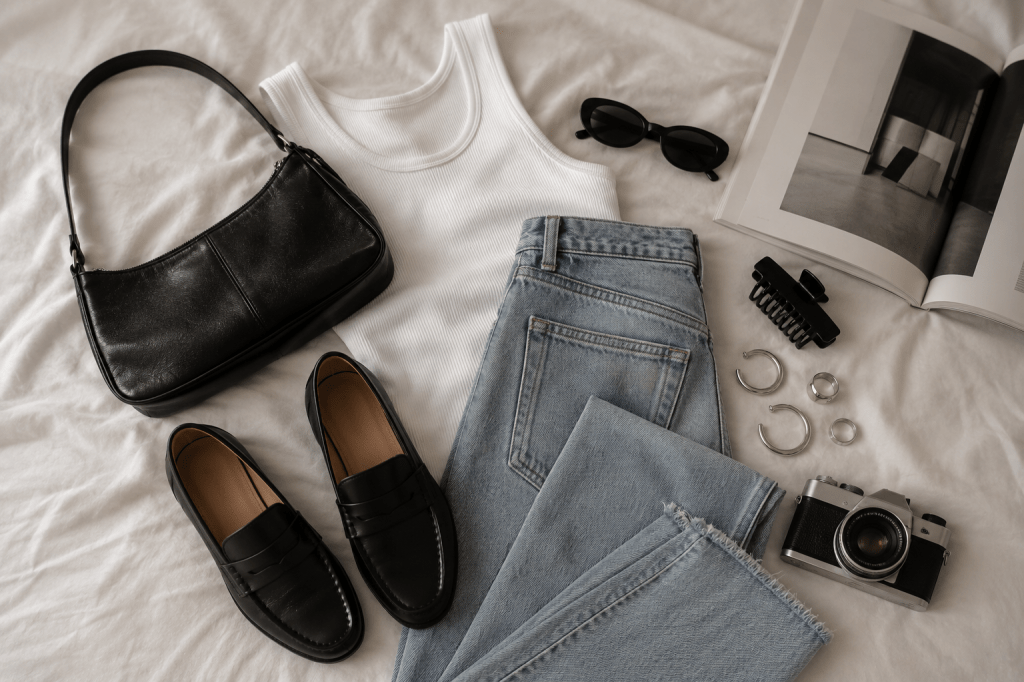
If it feels like fashion is trapped in a cycle of nostalgia, you’re not imagining it.
From slip dresses and minimalist tailoring to slim sunglasses, leather bombers, loafers, and pared-back silhouettes, the influence of the 1990s continues to shape the way people dress. While trends have always been cyclical, the industry’s fascination with the decade has become one of the defining narratives of modern fashion.
But this isn’t simply about recreating old outfits.
It’s about rediscovering an approach to dressing that feels increasingly relevant today.
Unlike the maximalism that characterized much of the early 2000s, 1990s fashion was built around simplicity. Clean tailoring, neutral palettes, quality fabrics, and understated accessories defined the era’s most memorable looks. The emphasis wasn’t on excess—it was on proportion, craftsmanship, and effortless confidence.
Those same principles have quietly returned to the center of fashion.
Today’s wardrobes are filled with oversized blazers, straight-leg denim, leather jackets, white tank tops, loafers, ballet flats, slip skirts, and minimalist handbags. While these pieces may feel contemporary, many trace their origins back to the decade that celebrated clothing designed to be lived in rather than simply photographed.
The appeal extends beyond aesthetics.
As consumers become more intentional about shopping, timeless clothing has become increasingly valuable. Investment dressing, capsule wardrobes, and versatile basics have replaced the constant pursuit of fast-moving microtrends. In many ways, the understated style of the 1990s offers a blueprint for building a wardrobe that feels both current and enduring.
It’s a philosophy that’s resonating with a new generation.
Social media has also played a significant role in the revival. Platforms like Instagram, Pinterest, and TikTok have introduced younger audiences to archival runway shows, vintage editorials, and iconic celebrity street style. Images that once lived inside fashion magazines are now instantly accessible, allowing an entirely new audience to reinterpret the decade through a modern lens.
Rather than copying the past, fashion is editing it.
Today’s interpretation of 1990s style feels cleaner and more relaxed. Tailoring is often oversized. Denim sits looser through the leg. Accessories are refined rather than flashy. Even classic pieces like leather bomber jackets and slip dresses are being styled alongside technical outerwear, oversized handbags, and contemporary sneakers.
The result is nostalgic without feeling like costume.
Designers have embraced this balance as well. Instead of reproducing the decade exactly as it was, many collections borrow individual elements—minimalism, relaxed tailoring, monochromatic dressing, and streamlined accessories—while updating proportions and fabrication for modern wardrobes.
It’s less about recreating the past than continuing its conversation.
The resurgence of the 1990s also reflects a broader shift in fashion’s priorities. After years dominated by logo-heavy luxury and rapidly changing trends, there is a renewed appreciation for clothing that feels timeless rather than temporary. Pieces are increasingly chosen for their longevity, versatility, and craftsmanship rather than their ability to generate attention for a single season.
The decade’s influence has become a foundation rather than a trend.
Perhaps that’s why the revival has endured for so long. Unlike more niche aesthetics that rise and fall within months, 1990s fashion is rooted in simplicity. A well-cut blazer, straight-leg jeans, a white T-shirt, and a leather jacket rarely feel out of place because they were never designed around novelty in the first place.
Fashion may continue introducing new silhouettes and fresh ideas, but it consistently returns to garments that have already proven their staying power.
For consumers, the resurgence offers reassurance. It suggests that investing in classic pieces isn’t simply a safe choice—it’s often the most fashionable one. As the industry continues evolving, the wardrobes inspired by the 1990s demonstrate that good design rarely loses its relevance.
Three decades later, the decade’s greatest influence isn’t any single garment.
It’s the enduring belief that style is built on simplicity, confidence, and clothes that stand the test of time.
FINAL NOTE:
Fashion’s relationship with the past has never been about repetition. The industry’s most enduring revivals succeed because they reinterpret familiar ideas for a new generation. The return of 1990s fashion isn’t simply nostalgia—it’s a reminder that the strongest style movements rarely disappear. They evolve.
 Archive Editorial
Leave a comment